Optimiza los procesos de tu pyme con la IA
CRECE 2025
Santo Domingo, Dominican Republic · organized by Cámara de Comercio y Producción de Santo Domingo
Co-presented with Andrés Rodríguez Conde
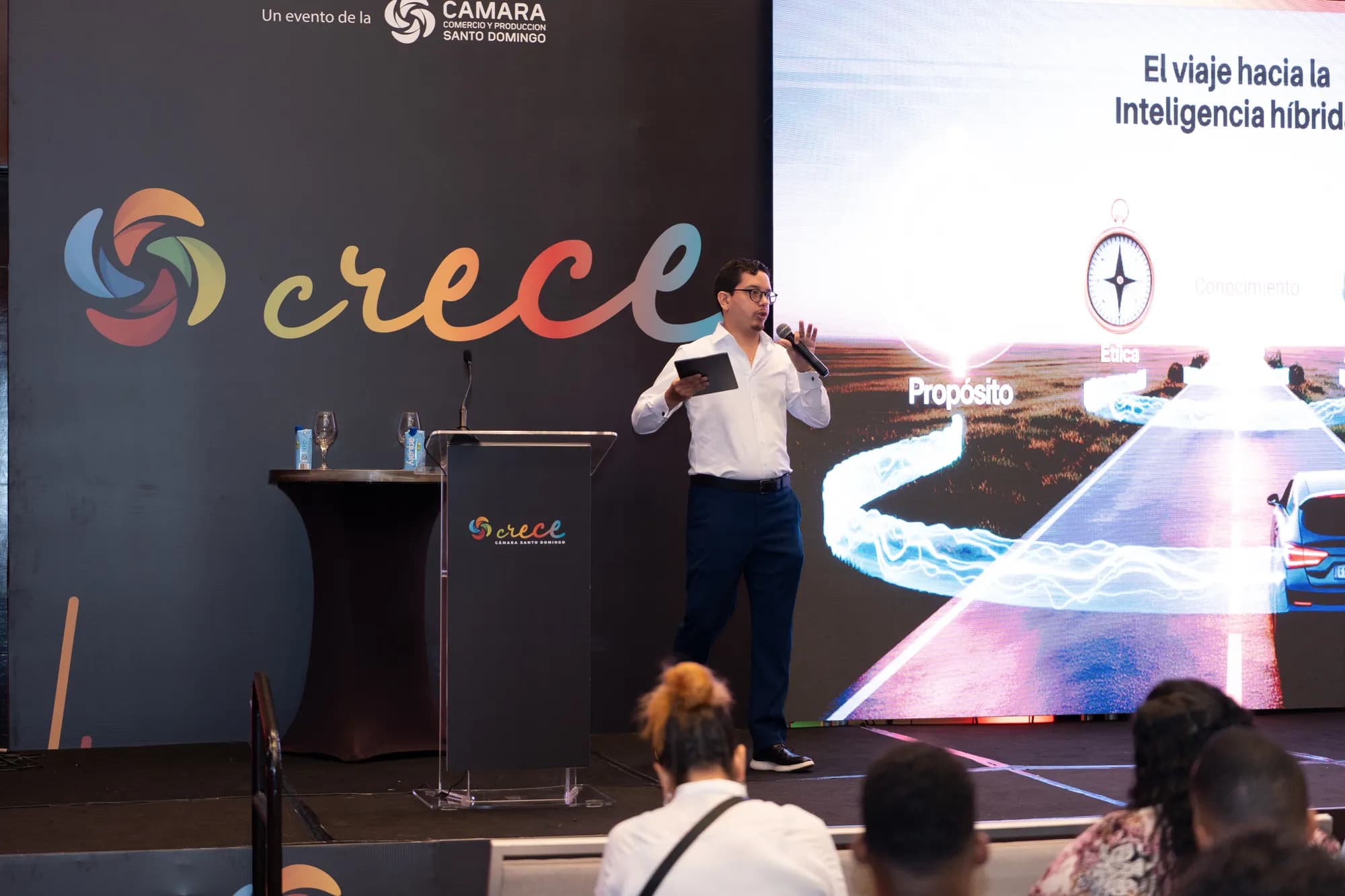
Small and mid-sized businesses get told two things about AI at the same time: that it changes everything, and that they are already behind. Both arrive at a volume that makes standing still feel like failure, which is a bad state to make purchasing decisions in.
This session was for that room. CRECE is run by the Cámara de Comercio y Producción de Santo Domingo, and the audience was Dominican pymes — owners and operators, not AI teams. Andrés Rodríguez Conde and I co-presented it; I was there representing the Cámara TIC.
So it did not open with tools. It opened with the unglamorous part: for most of the companies in the room, the first step is not AI. It is transformación digital — processes someone has actually written down, data that exists somewhere other than one person's spreadsheet. A model layered over undocumented chaos produces faster chaos.
El viaje hacia la Inteligencia híbrida
The frame for the talk was a road trip. Not a race — a trip you plan, with five things that go in the car.
Propósito, because a tool adopted without a reason to adopt it is a line item. Ética, because deciding what you will not automate is a business decision, and it is far easier to make before you have automated it. Conocimiento, because if nobody inside the company understands the system, every decision about it gets outsourced to whoever sold it.
Then Actitud and Acciones, which are the two that actually cost something. The first three are easy to nod along to in a conference room. The last two are the ones you find out about on Monday.
Del vértigo digital a la velocidad consciente
The second frame was about speed, and it compared three of them: a Formula 1 car, a motorbike carrying more than seven hundred people, and a bicycle.
Formula 1 is the speed everyone says they want. It also comes with a team, a budget, and a track — none of which the average pyme has. The overloaded motorbike is closer to what actually happens: moving, technically, while carrying far more than the frame was built to hold. The bicycle is slower, and it is yours, and you know exactly how much it can take.
Digital vertigo is adopting because the noise is loud. Conscious speed is choosing the pace the organization can genuinely absorb, and being willing to conclude that the slower one is correct. Nobody wins a prize for adopting first and abandoning it in March.
Lo que no se automatiza
Three human skills carried the rest of the talk. Buenas preguntas, because these systems answer whatever they are asked and the ceiling on the output is the quality of the question. Pensamiento crítico, because the answer comes back fluent and confident whether or not it is correct, and somebody has to be the person who checks. Empatía digital, because an automated interaction is only an improvement if it is still recognizably meant for a person.
The examples were deliberately ordinary: an educator working with a copilot, an augmented lawyer, a marketing team reading generative analytics, a nurse with a virtual assistant absorbing the paperwork. None of those are replacement stories. In each one a person is still deciding, and those three skills are what they are deciding with.
Which is where it landed: «El futuro del conocimiento no será ni completamente humano ni completamente artificial. Será híbrido.» The future of knowledge will be neither entirely human nor entirely artificial. It will be hybrid — and the first step toward it is the boring one, transformación digital, done before anything clever gets bolted on top.
The Cámara's president, Lucile Houellemont, wrote afterward to thank both speakers for «la entrega de un contenido de alto valor que aportó significativamente al desarrollo del evento».
WHAT IT CAME DOWN TO
- Purpose before tools — software adopted without a reason to adopt it is a subscription, not a strategy.
- Conscious speed beats digital vertigo: the right pace is the one the team can absorb.
- Good questions, critical thinking, and digital empathy are the parts the machine does not supply.
- For most pymes the first step is not AI at all. It is having processes worth automating.
FROM THE ROOM
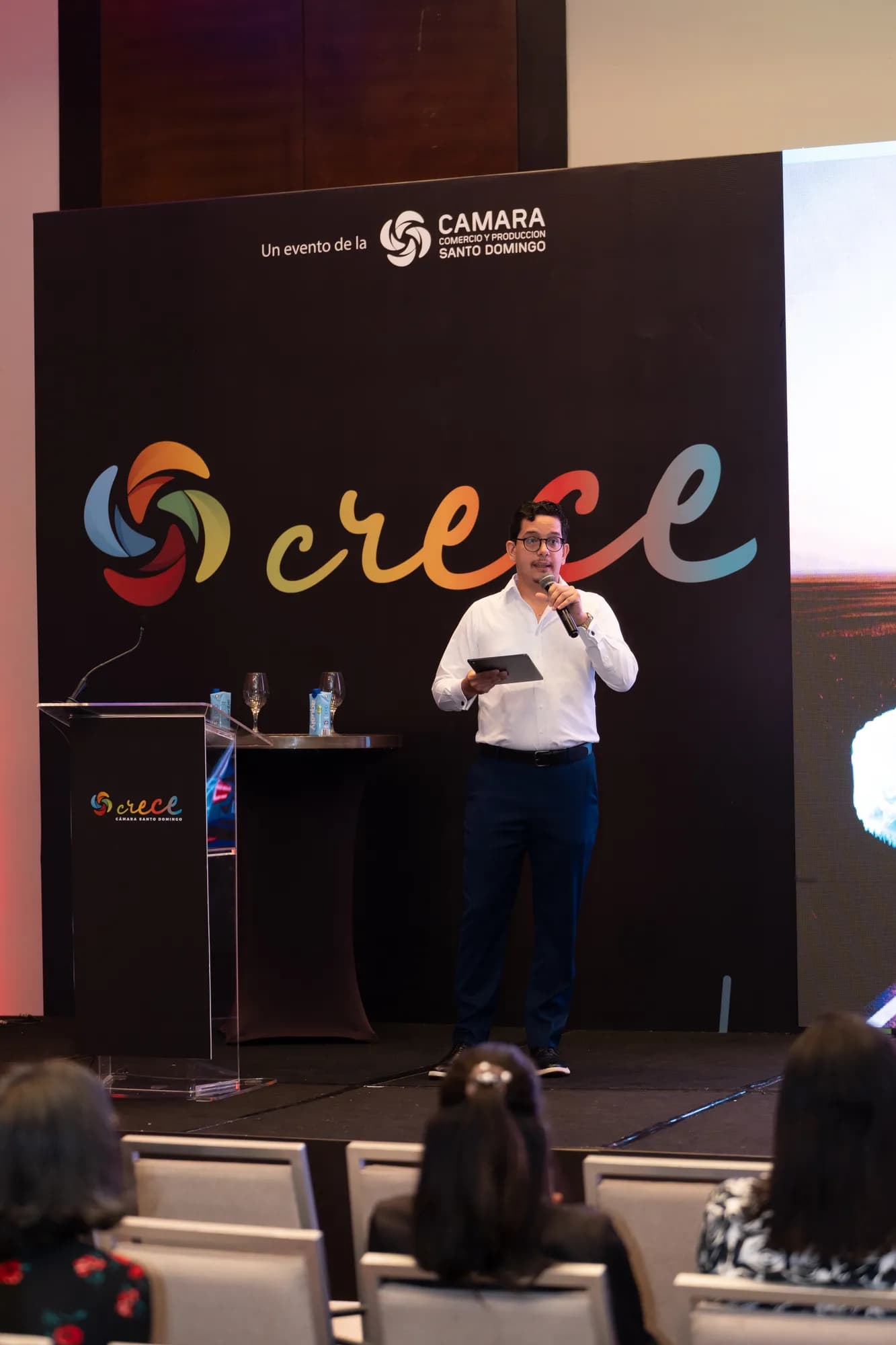
The CRECE stage, an event of the Cámara de Comercio y Producción de Santo Domingo. 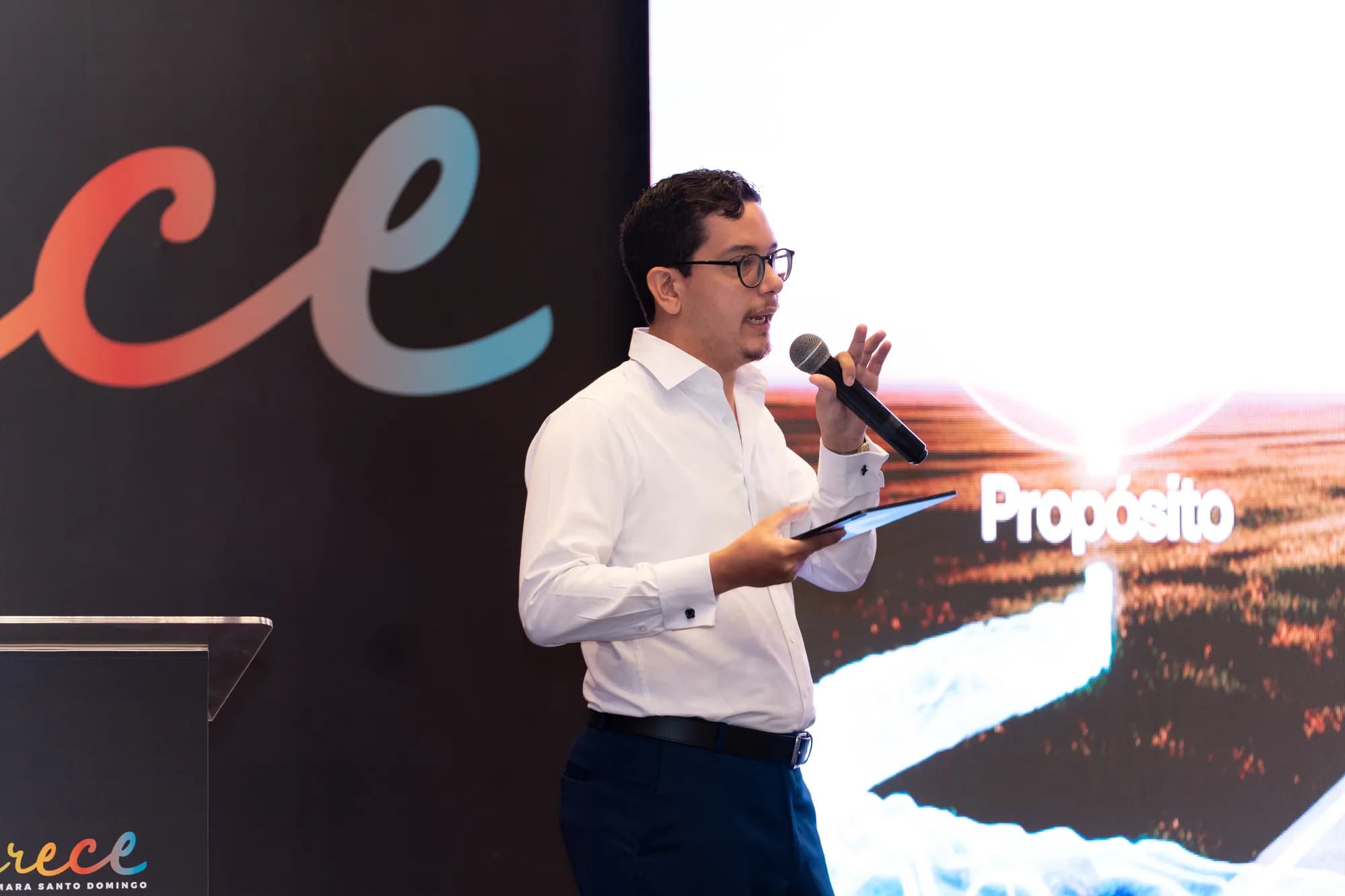
Propósito — the first thing that goes in the car.